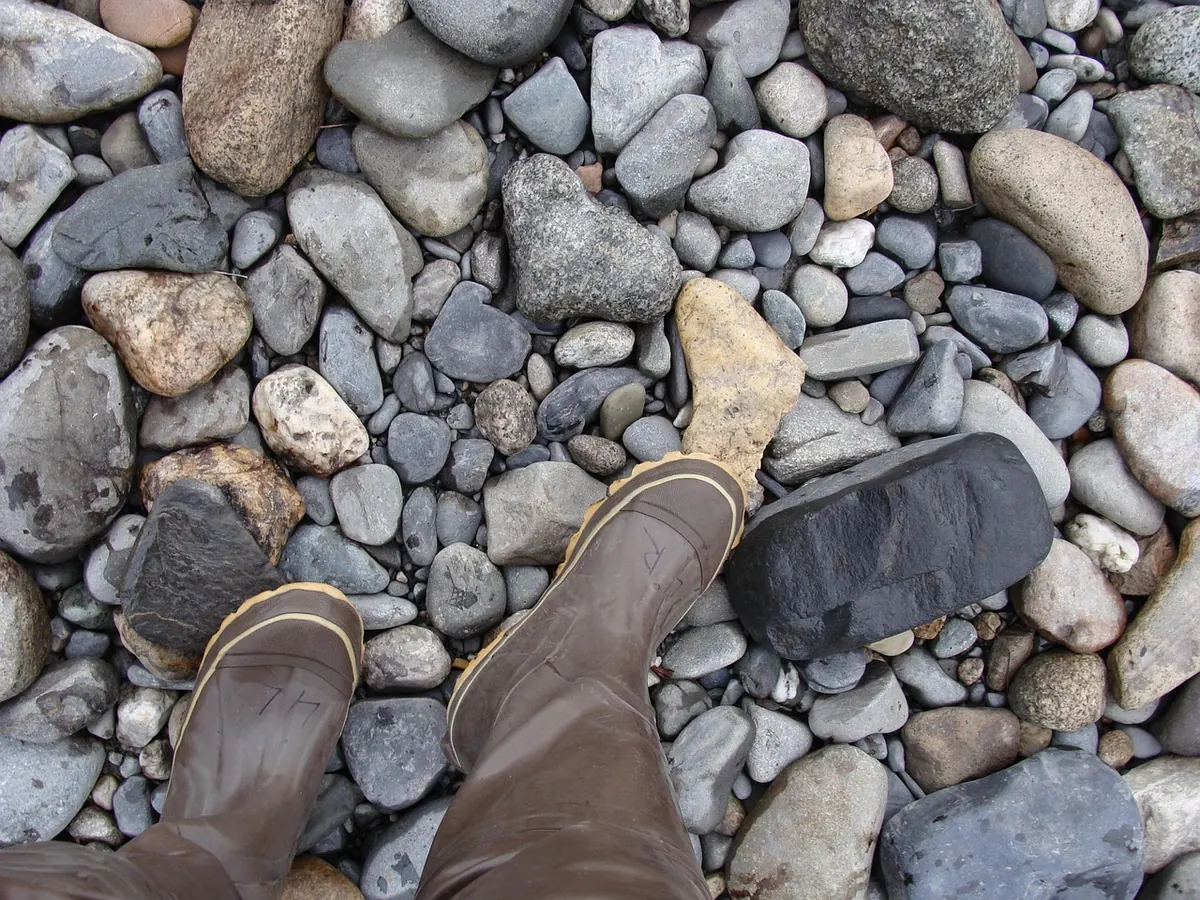
Boots are heavy, awkward, and usually the last thing anyone wants to think about after a sale, a move, or a return. So they get dropped in whatever box is closest, taped once, and handed over. Most of the time that works. When it doesn't, the failure is rarely mysterious — it's the same handful of mistakes: a box that can't carry the weight, a muddy sole that trips up a border check, a parcel with no tracking number that disappears into a depot and stays there. None of these are difficult to avoid. They take ten minutes of care and save weeks of argument.
Packing boots in a box that was never going to cope
Boots are dense. A pair of leather work boots can weigh more than a laptop, a coat and a pair of trainers combined, and all that weight sits in a small footprint. A single-wall box from the supermarket, or one that has already made two trips, will bulge, split at the corners or collapse when another parcel lands on top of it.
Use a double-wall corrugated box a few centimetres bigger than the boots on every side — not touching, not rattling. Fill the gap with something that holds its shape: crumpled packing paper, bubble wrap, foam. Air pillows alone lose pressure on long routes.
Put the boots heel to toe, or sole to sole, so they form one solid block instead of two objects sliding around. Run tape along the centre seam, then down both edges of the top and bottom — the H pattern. Once, properly, with real packing tape. Not masking tape, not string.
A note on returning boots to a shop
Retailers often ask for the original box. Put the boot box inside a plain outer box, and don't tape shipping labels directly onto the branded one or write on it.
Sending boots that are still wet, muddy or straight off the field
Damp boots sealed in a box for three days is how you get mould, a smell the buyer won't forget, and damage to the leather or lining that was entirely avoidable. Mud is worse. It dries, flakes, coats everything else in the parcel, and in some cases causes problems at the border.
Several countries, including Australia and New Zealand, take soil on imported goods seriously because of the plant and animal matter it can carry. Rules differ, so check the destination's requirements before you ship rather than after. A quick clean costs nothing; a held parcel costs days.
What to do:
- Knock off loose mud outside, then brush the soles and welts with a stiff brush.
- Wipe the uppers with a damp cloth. For leather, follow with a light conditioner once they're dry.
- Remove the insoles and let them air separately.
- Loosen the laces and pull the tongues forward so air reaches the inside.
- Dry at room temperature, away from radiators and direct sun. Overnight is rarely enough — give them a full day or two, stuffing them with newspaper if they're holding moisture.
Treating tracking as an optional extra
Any reputable courier offers tracking, and for boots it matters more than for most parcels. They're often expensive, frequently resold, and disputes tend to hinge on what happened and when. Without a tracking number, you have nothing to point at.
If you're sending several pairs, keep a simple log: date sent, courier, tracking number, recipient and what was in the box. A spreadsheet is enough. If you're shipping something valuable, ask what the insurance actually covers before you pay for it — many basic cover levels are lower than people assume.
Guessing at the declaration
Declaring a parcel as "gift" or "shoes" and hoping for the best causes more delays than almost anything else. Customs staff see thousands of parcels a week; vague descriptions get pulled aside.
- Describe the contents accurately: "used leather hiking boots, size 43".
- Give the weight and dimensions roughly right. Under-declaring invites a surcharge or a return.
- State a value you can justify. Insurance payouts follow the declared value, not what you hoped to get.
- Check whether the destination restricts leather, fur or second-hand footwear.
For anything with serious value, or a border crossing with rules you don't recognise, ask the courier or a customs broker before you seal the box. It's a five-minute question that can save a parcel.
Labels that only work if someone is feeling kind
Print the address clearly rather than writing it in a hurry. Include a phone number and, for international shipments, a return address. Put the label on the largest flat face of the box, not across a seam, and cover it with clear tape so rain doesn't turn it to pulp. Write the destination postcode in marker on a second side as backup. Smudged handwriting is one of the quietest reasons a parcel goes on a tour of the country.
Skipping photos and the paper trail
Photograph the boots before packing, inside and out. Photograph the packed box, the label and the receipt with the tracking number. That's ninety seconds of work, and it settles arguments about scuffs, missing laces or "it arrived empty". Keep the images until delivery is confirmed. If a claim ever becomes necessary, photos and a receipt do more than a long email.
The five-minute routine before the van arrives
- Boots cleaned, dried, insoles out, laces loosened.
- Double-wall box, correct size, gaps filled.
- Heel to toe, with no movement when you shake it gently.
- Tape in an H pattern, every seam sealed.
- Label printed, phone number included, postcode repeated on a second side.
- Photos taken, tracking saved, declaration honest.
Boots themselves are sturdy. It's everything around them that fails — the box, the moisture, the paperwork, the tracking. Get those four things right and shipping boots becomes unremarkable, which is exactly what you want. And if something does go wrong, you'll have the record to sort it out.
Photo: sherrisimpson / Pixabay